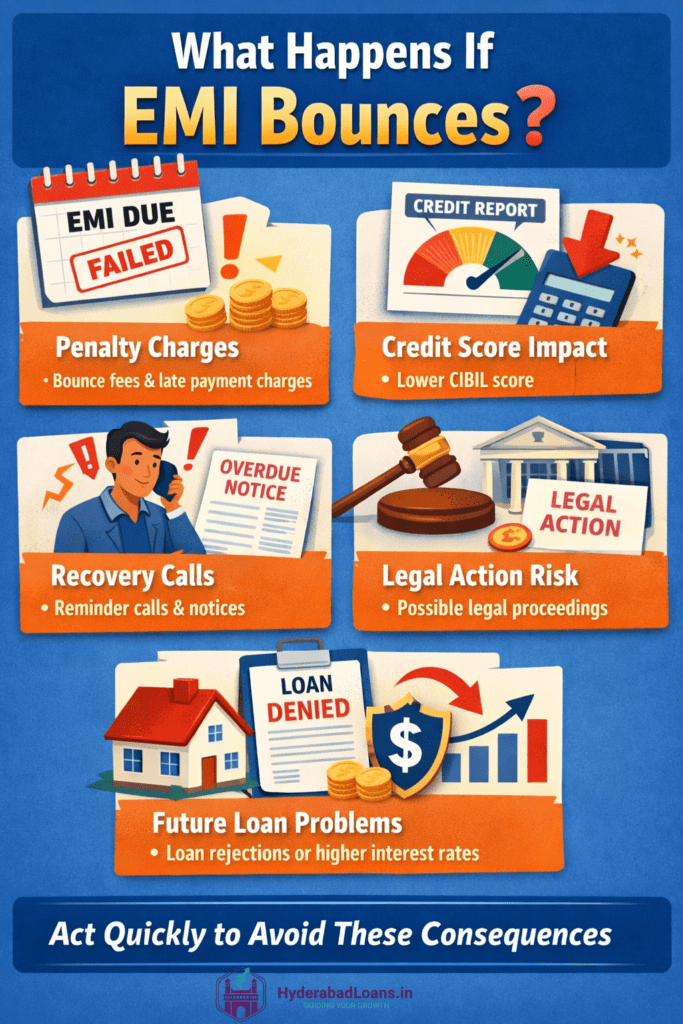
 An EMI bounce can happen to anyone—due to a salary delay, unexpected expenses, or even a technical banking issue. While a single missed EMI may not immediately derail your finances, the actions you take after an EMI bounce play a decisive role in determining its long-term impact on your credit profile and loan eligibility.
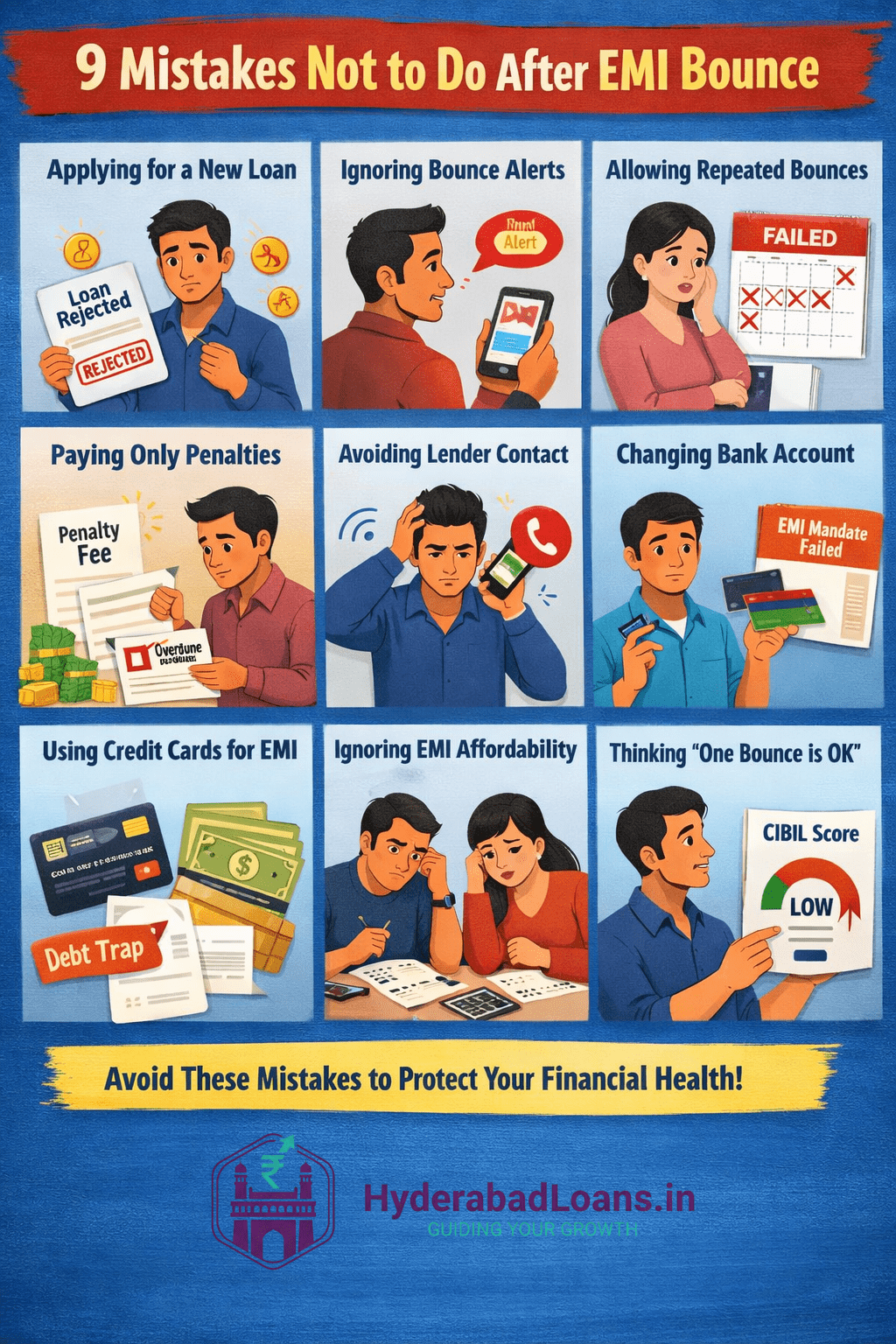
Many borrowers make avoidable mistakes after an EMI bounce that worsen the situation instead of resolving it. This article explains the 9 most common mistakes you must avoid after an EMI bounce, so you can protect your credit score and regain financial stability.
1. Applying for a New Loan Immediately After EMI Bounce
Panic often leads borrowers to apply for a fresh loan to arrange funds quickly. This is one of the most damaging steps you can take.
Why this hurts your profile
Every loan application creates a hard enquiry
EMI bounce combined with new enquiries signals repayment stress
Banks and NBFCs usually reject such applications outright
Applying for multiple loans in a short span can significantly worsen your creditworthiness. It is always better to stabilise existing repayments first instead of seeking new credit. Before applying again, borrowers should review their eligibility using tools like
loan eligibility check.
2. Ignoring EMI Bounce Alerts and Notifications
Some borrowers assume that if they ignore the message, the problem will resolve itself in the next cycle. Unfortunately, that rarely happens.
What actually happens
The EMI remains overdue
Additional charges may apply
Delays may still be reported to credit bureaus
Ignoring alerts allows the issue to grow silently and increases future complications.
3. Allowing Multiple EMI Bounces
While lenders may overlook a one-time issue, repeated EMI bounces are treated seriously.
How lenders view repeated failures
Indication of unstable cash flow
Higher probability of default
Reduced trust in borrower discipline
Multiple EMI bounces can severely affect approval chances for products like
personal loans, home loans, or business loans.
4. Paying Only EMI Bounce Charges Instead of EMI
A common misconception is that clearing bounce penalties alone fixes the issue.
Why this is a mistake
The EMI amount is still unpaid
Loan account remains overdue
Credit behaviour may still be marked as delayed
Bounce charges are only penalties. The EMI itself must be cleared to regularise the account.
5. Avoiding Communication With the Lender
Some borrowers stop answering calls or emails due to fear or embarrassment. This approach often backfires.
Why communication matters
Early discussion can prevent escalation
Lenders may offer short-term flexibility based on policy
Silence increases chances of recovery follow-ups
As per fair lending practices guided by the Reserve Bank of India, proactive borrower communication helps resolve repayment issues more smoothly.
6. Changing Bank Account Without Updating EMI Mandate
Closing or switching the bank account linked to your EMI without updating ECS/NACH details can cause repeated failures.
Common scenarios
Job change with new salary account
Closing an old savings account
Switching banks for better services
Mandate updates should always be completed formally with the lender to avoid future bounces.
7. Using Credit Cards or Informal Borrowing to Pay EMI
Using credit cards, payday apps, or informal loans to cover EMIs may offer short-term relief but creates long-term risk.
Hidden consequences
Higher interest burden
Multiple repayment commitments
Increased chances of another EMI bounce
This often converts a temporary issue into a long-term debt cycle.
8. Not Reviewing EMI Affordability After the Bounce
An EMI bounce is often a warning sign that your EMI may be stretching your budget.
What borrowers should reassess
Monthly income vs total EMIs
Rising household expenses
Availability of emergency savings
Using an
EMI calculator can help reassess affordability and prevent future repayment stress.
9. Assuming One EMI Bounce Has No Long-Term Impact
Many borrowers believe a single EMI bounce does not matter. This assumption can be risky.
Reality check
Even one delayed payment may appear in credit records
Lenders evaluate overall repayment behaviour, not isolated events
Impact may surface during future loan applications
While recovery is possible, careless behaviour after the bounce can slow down credit score improvement.
Quick Summary: 9 Mistakes Not to Do After EMI Bounce
| Mistake | Why It’s Risky |
|---|---|
| Applying for new loans | High rejection & credit damage |
| Ignoring bounce alerts | Penalties and reporting risk |
| Repeated EMI failures | Severe impact on credit score |
| Paying only penalties | EMI still overdue |
| Avoiding lender calls | Escalation risk |
| Changing bank account casually | Mandate failures |
| Using credit cards to pay EMI | Debt trap risk |
| Ignoring affordability review | Future defaults likely |
| Assuming one bounce doesn’t matter | Hidden long-term impact |
Final Takeaway
An EMI bounce is a temporary setback, but the mistakes made after it can have lasting consequences. Avoiding these 9 actions helps protect your credit score, maintain lender trust, and improve long-term loan eligibility.
Timely corrective steps, disciplined repayment behaviour, and calm decision-making are the keys to recovering smoothly after an EMI bounce.